
How to Practise English This Year: Simple Tips + Listening Test
(Cómo practicar inglés este año: consejos sencillos y pruebas de listening)
A new year is a good moment to reset your relationship with English — not to study more, but to practise better.
You don’t need long study sessions or complicated grammar to improve. What really makes a difference is regular contact with English, especially through listening, speaking out loud, and small, focused habits you can actually keep.
In this post, you’ll find a few simple, realistic tips for practising English this year — including how reading out loud helps fluency, how to practise listening online without feeling lost, and how to train your ear for specific information.
(No presión. Poco a poco, pero bien.)
And remember: practising on your own is powerful — and when you combine it with guided practice and feedback, progress feels much easier and faster.
🟢 5 Practical Ways to Improve Your English This Year
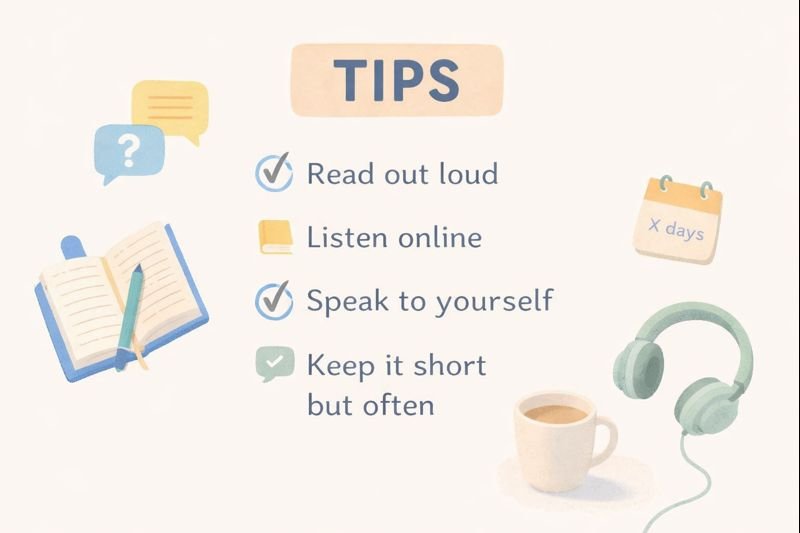
1️⃣ Read everything out loud
Reading silently helps with understanding, but reading out loud helps with fluency.
When you read out loud, your brain connects sound, pronunciation, rhythm and muscle memory. This makes speaking feel more natural.
You can read short texts, emails, subtitles or WhatsApp messages.
Don’t worry about mistakes — the goal is to get your mouth used to English.
(Leer en voz alta ayuda muchísimo a ganar fluidez.)
2️⃣ Get comfortable hearing your own voice
Many students understand English well but feel uncomfortable speaking. This often happens because they’re not used to hearing themselves in English.
Try reading one paragraph out loud, repeating one sentence from a video, or speaking for 30 seconds about your day.
It may feel strange at first — that’s normal.
3️⃣ Practise listening with a clear goal
Don’t just press play and hope for the best.
Before you listen, choose one simple objective:
Who is speaking?
What is the topic?
Is the speaker positive or negative?
Listening with a goal helps you focus on meaning, not every word.
4️⃣ Listen for specific information
You don’t need to understand everything to improve your listening.
Instead, listen for:
numbers
places
reasons
opinions
This is how listening works in real life — and it’s much less stressful.
5️⃣ Keep it short, but regular
You don’t need long study sessions to improve your English.
10–15 minutes a day is enough if you practise regularly and repeat activities.
English improves with habit, not intensity.
🌱 Final thought
Small steps. Often. With support.
That’s how progress happens.
Improving your English doesn’t have to be stressful or perfect — it just needs to be regular and supported. Practising on your own is a great start, and when you combine that with guided practice, clear explanations and feedback, progress feels much easier.
If you’d like help building these habits, practising listening and speaking, or simply feeling more confident using English in real situations, we’d love to help. Feel free to get in touch with us to find out about our classes and see what might work best for you.
(Si te apetece practicar con apoyo y acompañamiento, estamos aquí para ayudarte.)
Recent Comments