
Rush: What Does It Mean in English?

Rush — What Does It Mean?
Introduction
You’ve probably heard sentences like:
👉 I’m in a rush.
👉 Don’t rush your work.
👉 There was a rush of customers.
Same word… different meanings.
Let’s make it simple.
What does “rush” mean?
👉 Rush = to do something quickly, usually because you don’t have enough time.

🔹 Real Examples — “Rush” in Use
1. As a verb (rush)
- I had to rush to catch my flight.
- Don’t rush the report — check it carefully.
- She rushed out of the meeting without saying goodbye.
- We’re rushing to finish everything before the deadline.
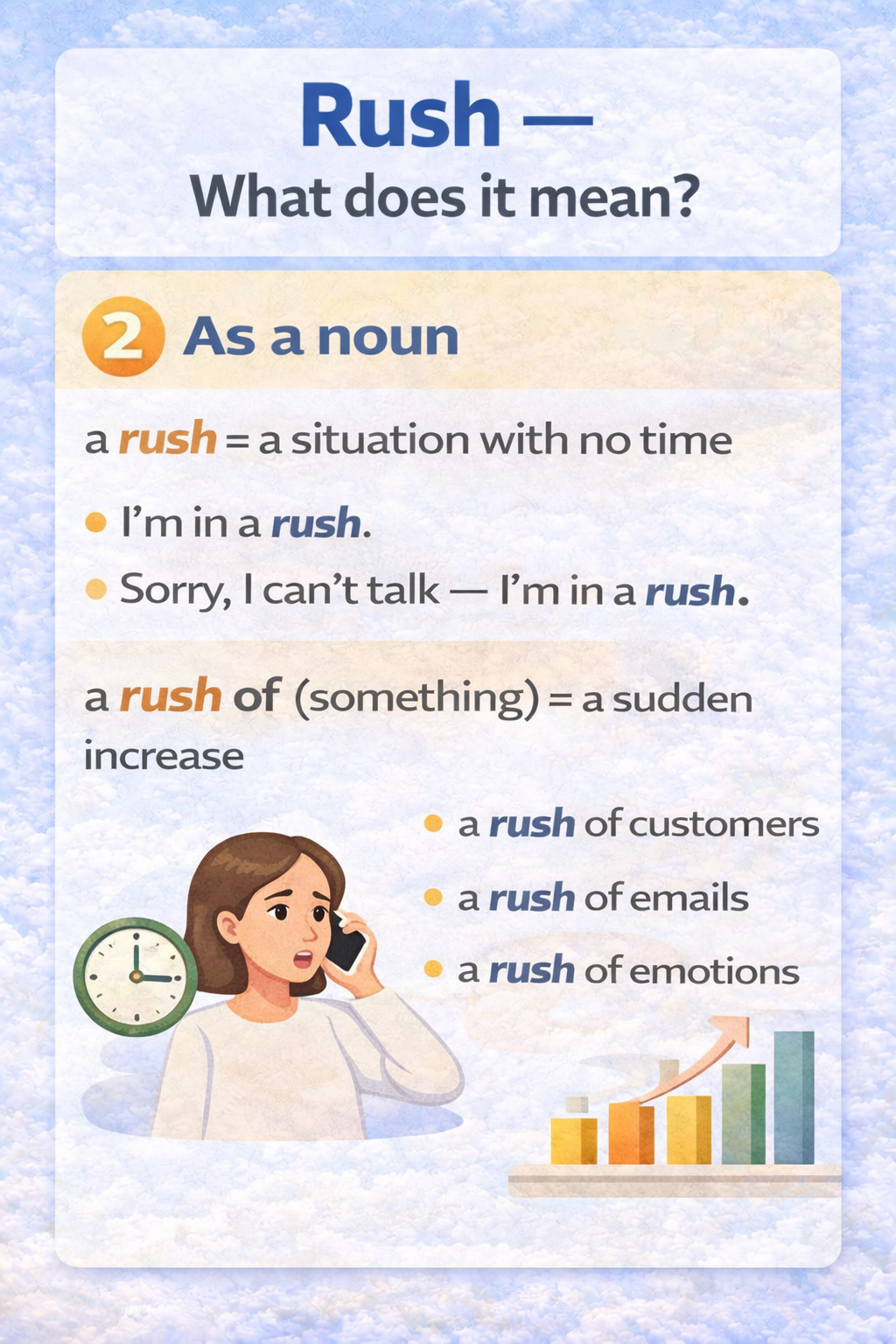
2. In a rush
- Sorry, I’m in a rush — can we talk later?
- He left in a rush and forgot his laptop.
- I did it quickly because I was in a rush.
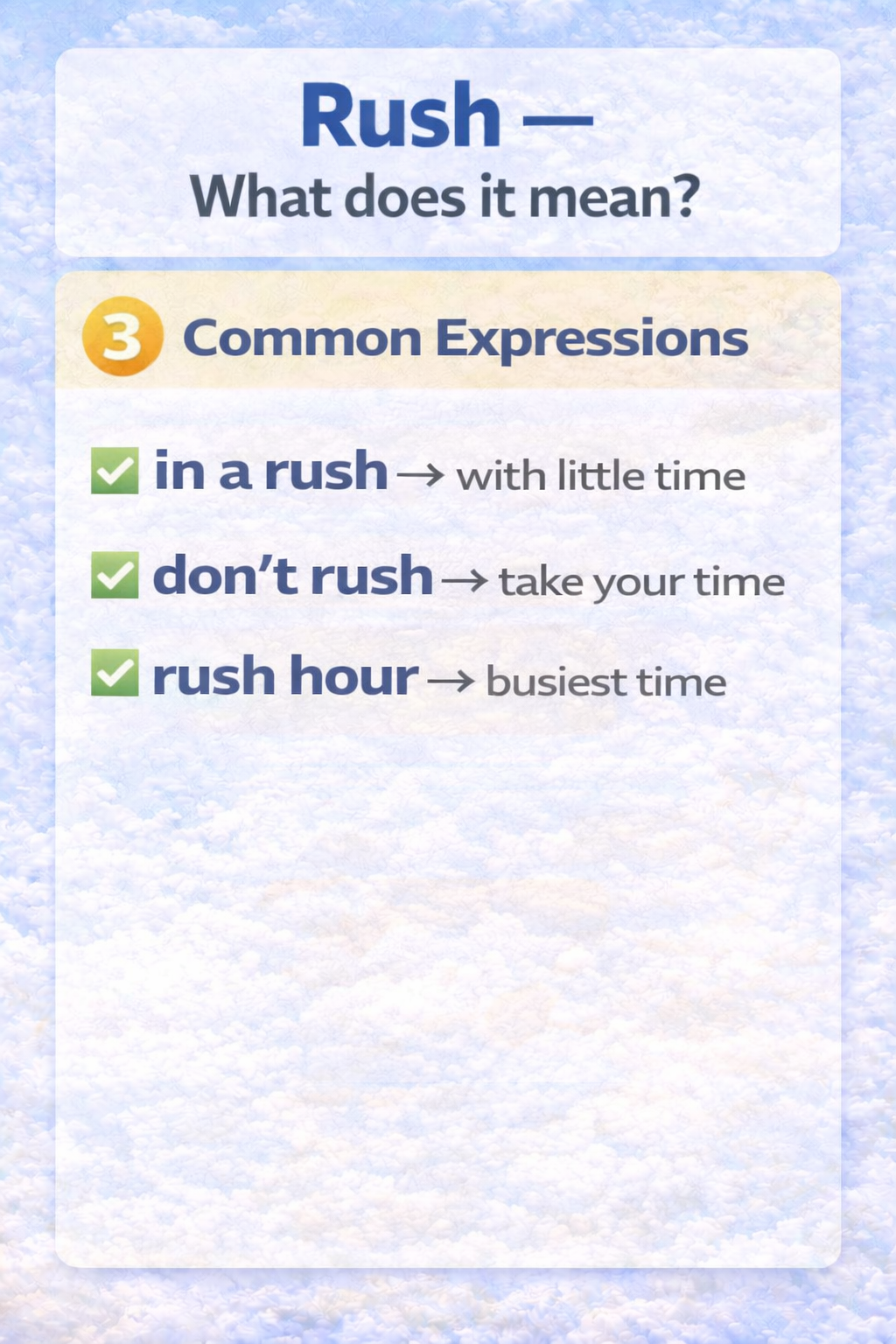
3. Don’t rush
- Don’t rush — take your time.
- There’s no need to rush this decision.
- Don’t rush the process, it’s important to get it right.
4. Rush hour
- Traffic is terrible during rush hour.
- I try to avoid driving in rush hour.
- The train is always full at rush hour.
Mini test
🔹 Mini Practice
Choose the best option:
- I can’t talk now, I’m ______.
- Don’t ______ your work — check it first.
- The roads are very busy during ______.
- I ______ to the station because I was late.
Answers
- in a rush
- rush
- rush hour
- rushed
💬 Your Turn — Practise in the Comments (copy and paste with your answers in comment section below)
Answer these questions using rush, in a rush, or rush hour.
- Why can’t you help me right now?
👉 Because I’m in a rush. - Why were you late this morning?
- Why didn’t you check your work carefully?
- When is the worst time to drive in your city?
- Why did you leave so quickly?
- Do you prefer to work slowly or quickly?
Recent Comments