
Talking About the Future Like a Native: Expressions & Phrasal Verbs
Advanced Expressions & Phrasal Verbs
Most English learners know how to use will, going to, and the present continuous.
But at higher levels, the problem isn’t grammar. It’s how natural you sound.
Native speakers often avoid direct future forms and use expressions, phrasal verbs, and softer language to talk about plans, expectations, and uncertainty. This post will help you do the same.
This short test is not about rules. It’s just to help you notice how many different ways English talks about the future.
Results


#1. I’m not sure yet. __________, but I’ll let you know. (Choos the most natural sounding option)
#2. The company didn’t cancel the expansion plans. They __________ them. (Choose the most natural sounding option)
#3. I’m not sure this plan will be successful. (Choose the most natural sounding option)
#4. At the moment, everything looks good. The project is __________. (Choose the most natural sounding option)
#5. We planned the trip, but it failed at the last moment. (Choose the most natural sounding option)
#6. I haven’t decided yet, but I may change jobs. (Choose the most natural sounding option)
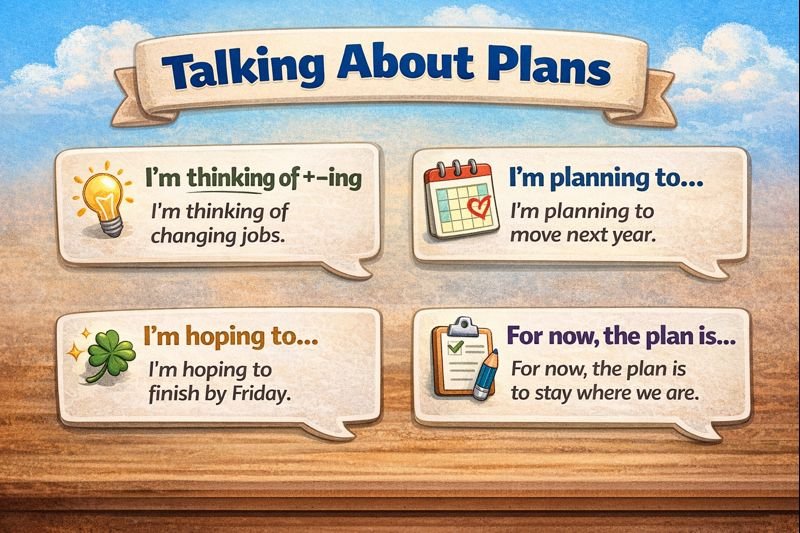
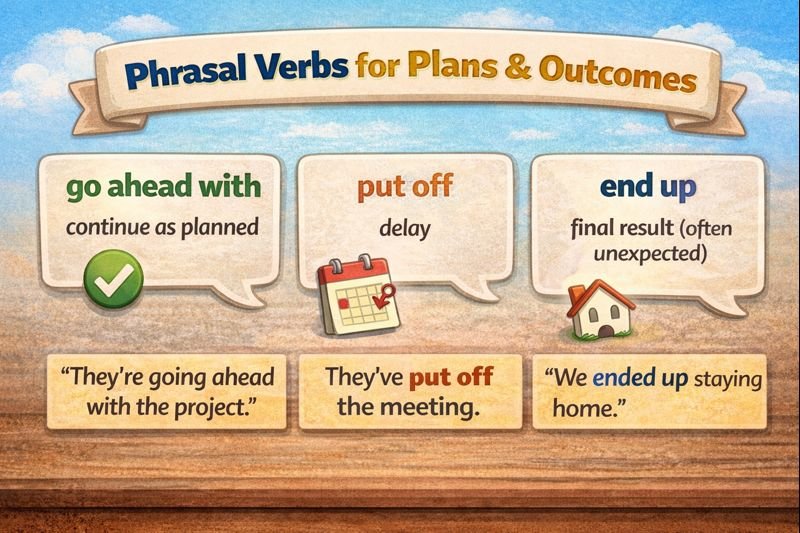
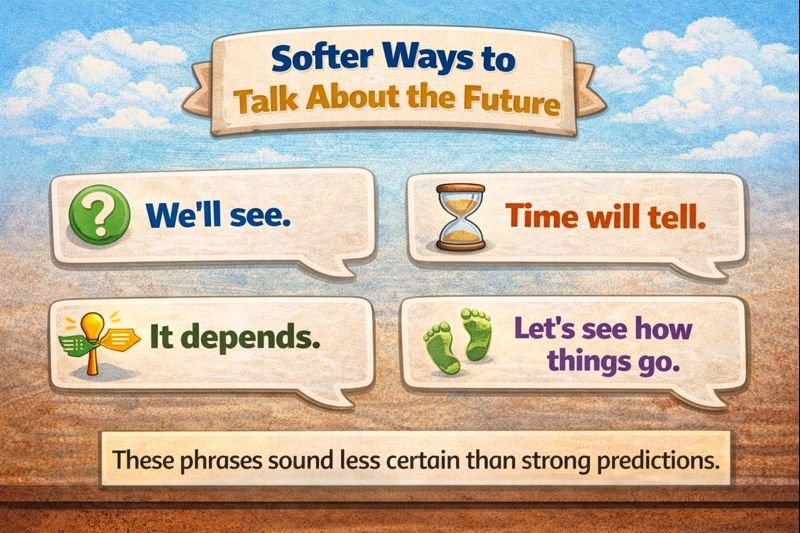
Below are some of the most common and natural expressions native speakers use when talking about the future. You don’t need all of them at once. Start with these.
Let’s Practise Together 👇
Choose one or two sentences below and complete them in the comments.
- I’m thinking of ____________________.
- For now, the plan is ____________________.
- We might end up ____________________.
- Nothing’s decided yet, but ____________________.
- If everything works out, ____________________.
There is no single correct answer. The goal is to use the language naturally, not perfectly.
I read all the comments and I’ll reply with:
a small correction if needed
a more natural option
or a short explanation
If you’re not sure, that’s fine. Trying is how fluency grows.
Let’s see how everyone talks about the future.
Recent Comments